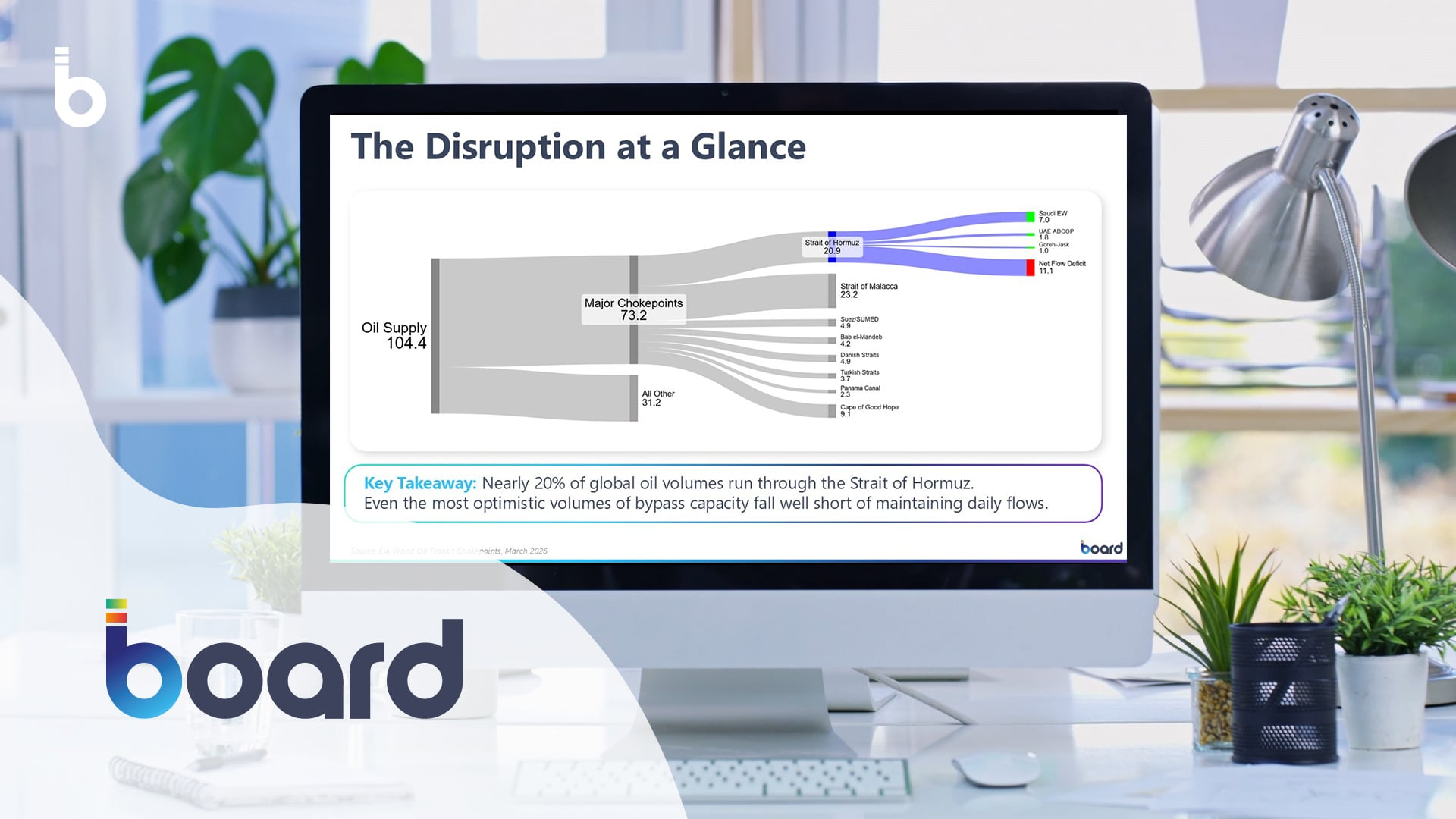
This month’s Board Economic Outlook examines the rapidly shifting dynamics in global oil markets and how a supply shock is already translating into higher costs for consumers and businesses. As tanker activity through the Strait of Hormuz drops to near zero amid elevated risk and volatility.
Nick Brown explores how higher energy prices can reverse favorable trends seen through 2025, increase inflation risk, and complicate the Fed’s 2026 rate-policy path—especially given an already fragile labor market. The outlook also highlights why strategic reserve releases may offer near-term relief, but may not offset the price pressure already moving through the economy.
What this outlook covers:
- Oil disruption dynamics and why Hormuz matters (nearly 21% of global oil movement)
- Constraints on bypass routes and implications for global supply deficits
- Early consumer and supply-chain impacts (gasoline and diesel price pressure)
- What to watch next: tanker activity, policy tradeoffs, and March/April inflation data
For business leaders, these signals can influence cost assumptions, pricing pressure, and scenario planning for 2026. Watch the full outlook video to understand the indicators shaping the months ahead.